Corporate Wellness Challenges: The Complete Guide to Running Engaging Programs That Drive Participation and Results
Introduction
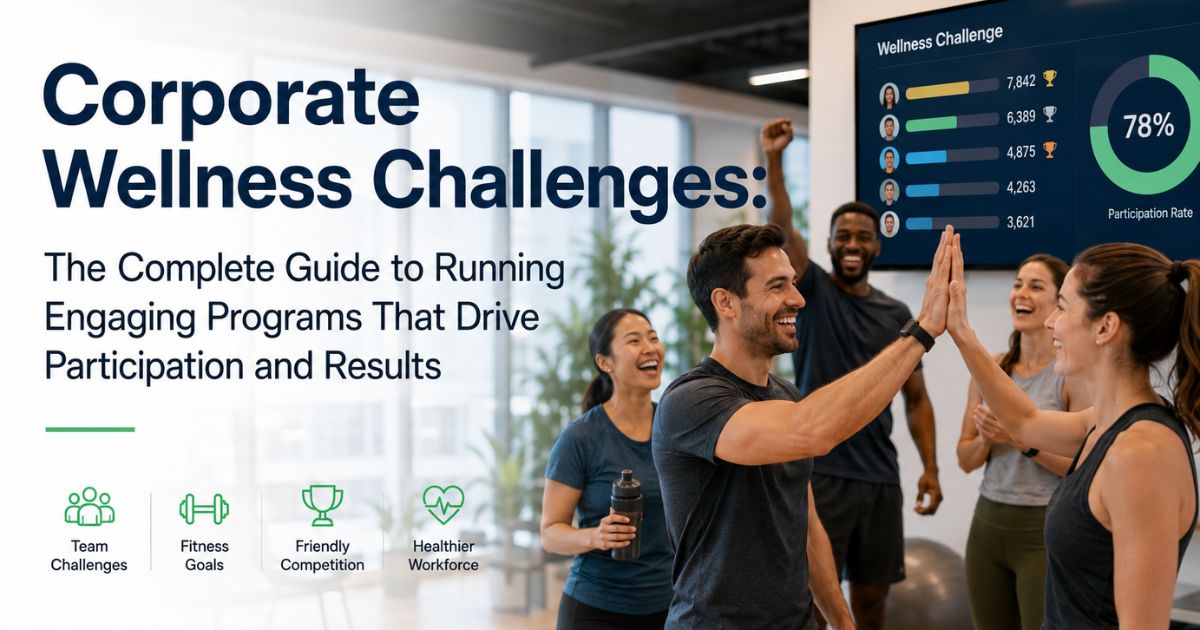
Corporate wellness challenges turn solo effort into shared energy. Employees stop working out alone. They compete. They cheer each other on. They show up.
Step challenges. Weight loss contests. Team fitness contests. These challenges often get more engagement than solo wellness efforts.
Companies that run regular fitness challenges often see:
• More people taking part than in programs without challenges
• Stronger engagement across teams
• Better health results for participants
• Stronger team spirit
• Better retention and job satisfaction
This guide shows you how to plan, launch, and run challenges that work. It also covers how AI is changing what's possible.
Why Corporate Wellness Challenges Work
Competition Drives Engagement
People are wired to compete. Challenges use this.
• A step challenge with a leaderboard gets checked many times a day.
• A weight loss contest keeps people coming back to show progress.
• In a team challenge, no one wants to let the team down.
Studies show contests boost engagement more than solo efforts.
Community Builds Adherence
Challenges build community around wellness.
An employee working out alone has an isolated experience. A team walking together builds camaraderie. Teammates cheering each other on builds a healthier culture.
People stick with community programs longer than solo programs.
External Accountability Keeps People Going
It's easy to quit a wellness journey alone. It's harder to quit when teammates are counting on you.
A leaderboard shows your progress to everyone. This kind of accountability boosts follow-through.
Gamification Makes It Fun
Corporate wellness challenges borrow ideas from games:
• Points and scoring
• Leaderboards
• Badges and achievements
• Levels or stages
• Prizes and rewards
Games are more fun than plain fitness routines. Companies that add game elements often see more engagement.
Novelty Prevents Burnout
The same fitness routine gets old fast. A new challenge each month stays fresh and fun. People look forward to it. New challenges help stop the usual drop in engagement.
Inclusive Design Reaches More People
Well-designed challenges work for everyone.
• Step challenges work at any fitness level. A walk counts the same as a run.
• Weight loss challenges need no athletic background.
• Team challenges build camaraderie across departments.
Inclusive challenges reach more employees. Programs built only for your most active employees reach fewer people.
How AI Makes Wellness Challenges More Effective
Traditional challenges rely on manual setup and fixed leaderboards. Reports come only after the fact. AI makes challenges adapt as they go instead.
An AI-powered platform can:
• Recommend the right challenge for each employee or team, instead of one format for everyone
• Personalize goals based on a person's starting point and history
• Predict drop-offs before they happen
• Spot disengaged participants early, so someone can reach out in time
• Automate reminders, so no one has to manually chase participation
• Recommend rewards that fit what actually motivates each person
This is where a platform like Fitzpot's AI Wellness Companion comes in. It brings smart tools to challenges that used to run on spreadsheets and guesswork.
Types of Corporate Wellness Challenges
1. Step Challenges
Employees track daily steps with a phone, smartwatch, or fitness tracker. The contest can be solo or team-based. A leaderboard shows daily or weekly progress.
• Duration: 4-8 weeks
• Participation: Usually the highest of any challenge type. Very easy to join.
• Impact: Companies often see real gains in daily step counts. Many people keep up the higher activity after the challenge ends.
• Best for: A company's first wellness challenge. Low effort, high engagement.
2. Weight Loss Challenges
Employees set a weight loss goal. They track it over 8-12 weeks, with optional private weekly weigh-ins. Scoring is based on the percent of body weight lost.
• Duration: 8-12 weeks
• Participation: Lower than step challenges. It takes more commitment.
• Impact: People often lose real weight during the challenge, though keeping it off afterward varies.
• Best for: Employees already motivated by weight loss goals. Needs careful, sensitive framing.
3. Fitness Challenges
Any workout counts: gym sessions, running, yoga, sports. Points come from how often and how hard people work out.
• Duration: 4-8 weeks
• Participation: Moderate. It works best for people who already exercise.
• Impact: Companies often see more frequent workouts and a stronger gym community.
• Best for: Employees who already focus on fitness, and building gym community.
4. Team Challenges
Employees are grouped by department, at random, or by choice. They earn points together. Scoring can mix steps, workouts, and healthy habits.
• Duration: 4-8 weeks
• Participation: Often the highest of any format. The social side drives this up.
• Impact: Builds camaraderie, crosses department lines, and tends to beat solo challenges on retention.
• Best for: Building workplace culture broadly.
5. Behavior Challenges
Employees track healthy habits each day: water, exercise, sleep, meditation, or vegetables. Points reward staying consistent.
• Duration: 4 weeks
• Participation: Moderate, and easy to keep up.
• Impact: Builds habits, needs no equipment, and can create a ripple effect. Good sleep supports better eating and more exercise.
• Best for: Building habits, newer employees, or less-active employees.
6. Nutrition Challenges
Participants track meals and nutrition: macros, servings, hydration, or sugar cuts. Photo check-ins add accountability.
• Duration: 4-8 weeks
• Participation: Lower. It takes discipline.
• Impact: Companies often see better eating habits and related health gains.
• Best for: Employees who care specifically about nutrition.
With an AI Recommendation Engine, employees don't have to guess which challenge fits them best. AI matches each person to a step, hydration, mindfulness, or nutrition challenge based on their interests and history.
Corporate Challenge Launch Roadmap: 8 Weeks
Week 1: Planning & Design
• Choose a challenge type. Start with a step challenge for the easiest, highest turnout.
• Set your goals for individuals, engagement, and the business.
• Pick start and end dates. Avoid holidays and other company events.
• Set a budget for the platform, prizes, coaching, and marketing.
Output: Challenge plan, budget approved, dates locked.
Week 2: Platform & Setup
• Choose a platform. Look for easy tracking, leaderboards, team support, and a mobile app.
• Set up teams, scoring rules, goals, and the leaderboard display.
• Design prize tiers. Gift cards, wellness products, or paid time off work well. Cash can create tax issues.
• Build the reward structure, including any milestone rewards along the way.
Output: Platform ready, prizes designed, scoring finalized.
Week 3: Marketing & Communication
• Create marketing materials: emails, office posters, social posts, a short video, and an intranet page.
• Build excitement around the health benefits, prizes, and how easy it is to join.
• Plan a 30-60 minute kick-off event with an overview, a platform demo, and Q&A.
• Set up a help desk, FAQ, and tutorial video for support.
Output: Marketing materials done, kick-off planned, support ready.
Week 4: Enrollment & Kick-Off
• Open sign-ups and send invitations.
• Help early sign-ups get set up and log in for the first time.
• Host the kick-off event and get people logged in live.
• Track sign-ups against your goal.
Output: Challenge launched, strong early sign-up, excitement built.
Weeks 5-7: Active Management & Engagement
• Check daily and weekly progress. Reach out to people who haven't joined in.
• Send weekly leaderboard updates and share success stories.
• Keep offering support: technical help, coaching tips, and encouragement.
• Watch for drop-off or an uneven leaderboard. Adjust scoring if needed.
Between updates, an AI Wellness Companion can keep engagement alive on its own. It can:
• Remind participants who haven't logged activity in a while
• Celebrate milestones automatically as people hit them
• Encourage teammates to check in with each other
• Suggest rest days when activity data shows someone needs one
• Send a nudge to inactive participants before they drop out
That keeps the challenge alive every day, not just on the days a leaderboard email goes out.
Output: Steady engagement, strong participation, a growing community.
Week 8: Closing & Celebration
• Build excitement for the finale with a countdown and a progress recap.
• Calculate and check final scores.
• Host a celebration, award prizes, and thank everyone who took part.
• Measure results: participation rate, health metrics, engagement, satisfaction, and ROI.
Output: Challenge complete, winners celebrated, results recorded, momentum for the next one.
Keys to Sustained Engagement
• Run challenges often, not just once. One challenge is a good start. Four or more a year builds a real wellness culture.
A sample yearly plan:
• Months 1-2: Step Challenge
• Months 3-4: Team Challenge
• Months 5-6: Fitness Challenge
• Months 7-8: Behavior Challenge
• Months 9-10: Step Challenge, round two
• Months 11-12: Holiday Team Challenge
• Mix it up. The same challenge type gets stale. Variety keeps different employees engaged at different times.
• Favor team formats. Team challenges draw more people than solo ones. The social side builds accountability.
• Keep it simple. Complicated challenges get low turnout. A step challenge, just walk more, is the easiest way in.
• Make progress visible. Update leaderboards often. Keep them easy to check. People will look several times a day if it's clear.
• Design for everyone. The most athletic person shouldn't be the only winner. Team mixes, category splits, and simple tie-breakers all help.
• Get leaders to join in. When leaders take part, participation rises. A CEO doing the step challenge shows it matters.
• Watch for burnout, not just inactivity. Pushing too hard can backfire. AI-based burnout monitoring flags falling engagement and missed milestones. HR can step in before someone drops out for good.
Common Corporate Wellness Challenge Mistakes
• Designing only for "fitness people." Average employees feel left out, so turnout stalls. Build for all fitness levels instead.
• Skipping the leaderboard. No visible competition means low engagement. Keep it front and center, and keep it current.
• Setting goals that are too hard. Big targets lead to failure and quitting. Set goals people can hit.
• Offering boring prizes. A single generic gift card won't excite anyone. Mix small, frequent rewards with bigger grand prizes.
• Giving no coaching or support. Without guidance, people join, struggle, and give up. Offer tips and real support.
• Running it once a year. Engagement spikes during the challenge and crashes right after. Regular, staggered challenges keep the culture alive.
• Under-communicating. Low promotion means low awareness and low turnout. Communicate often, through several channels.
Measuring Corporate Wellness Challenge Success
Engagement metrics:
• Percentage of employees taking part
• Average activity levels (steps, workouts)
• Challenge completion rate
• How often people use the platform
Health metrics:
• Health gains (steps, weight, fitness)
• Activity kept up after the challenge ends
• Signs of behavior change
Business metrics:
• Impact on healthcare costs
• Changes in absenteeism
• Employee engagement scores
• Retention rate
• Team spirit and culture improvement
Raw participation numbers only tell part of the story. Fitzpot's Corporate Wellness Score combines participation, consistency, engagement, and wellness trends into one clear number. Leaders get a real-time view of challenge health, not a pile of separate reports.
At the individual level, an Individual Wellness Score looks beyond step counts. It weighs consistency, participation, recovery, and healthy habits together. This gives a fuller picture of each employee.
Predictive Analytics goes further, helping teams:
• Spot falling participation before it shows up in the numbers
• Predict how likely people and teams are to finish the challenge
• Find departments that need extra support before the challenge loses steam
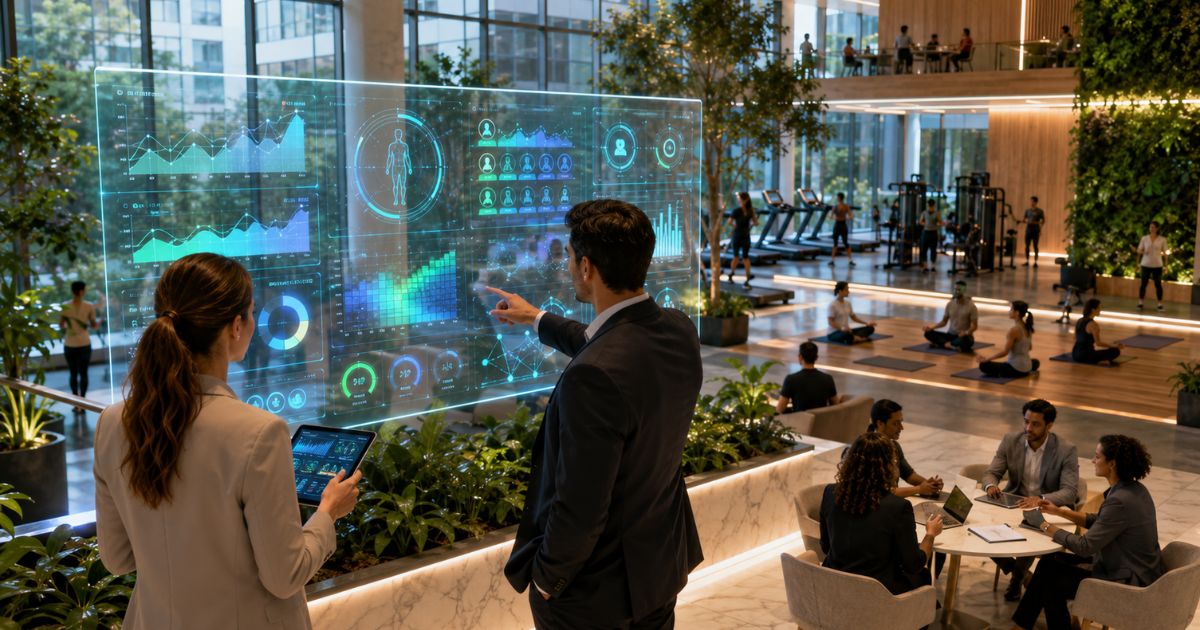
For a company-wide view, an AI Dashboard brings it all together: participation, Wellness Score, completion, engagement trends, burnout risk, ROI, and department comparisons. Leaders see challenge health at a glance, not pieced together from separate reports.
Companies often report strong gains in participation, lasting behavior change, and better engagement scores from well-run challenges. Results vary by company and challenge design.
How Fitzpot Powers Smarter Corporate Wellness Challenges
Everything above points to one idea: challenges work better with intelligence built in from the start. A modern, AI-powered approach to corporate wellness challenges brings together:
• AI Recommendation Engine -- matches employees to the right challenge type
• Corporate Wellness Score -- one clear number for overall challenge health
• Individual Wellness Score -- a fuller view of each employee's engagement and habits
• Burnout Risk Monitoring -- catches disengagement before it becomes attrition
• AI Wellness Companion -- keeps engagement alive between official updates
• Predictive Analytics -- forecasts participation and completion trends
• AI Dashboard -- a real-time, company-wide view for leaders
• Corporate Wellness Marketplace -- find trainers, coaches, nutritionists, and other wellness pros to support participants
Together, these turn a challenge from a one-time event into an ongoing, data-informed wellness program.
Conclusion
Corporate wellness challenges are proven engagement tools. Companies keep building on that track record. Well-run challenges beat solo wellness efforts by a wide margin.
Launch your first challenge this quarter:
• Choose a challenge type
• Plan an 8-week launch roadmap
• Market it heavily
• Support participants actively
• Celebrate the results
• Plan the next one
The most successful wellness challenges combine community, gamification, and ongoing AI-driven insight. Fitzpot brings these together through AI-powered recommendations, Corporate Wellness Scores, Individual Wellness Scores, Burnout Risk Monitoring, Predictive Analytics, an AI Wellness Companion, and real-time dashboards for leaders. Together, these tools turn short-term challenges into a lasting wellness culture.