Employee Wellness Programs: The Complete Guide to Building, Implementing, and Measuring Corporate Fitness ROI
Introduction
Most companies know employee wellness matters. But few build employee wellness programs that work. Many launch with good intentions. Then things fall apart. Few people join in. Results are hard to see. It's hard to prove the ROI.
Strong wellness programs get real results. Companies often report:
- Lower healthcare costs
- Happier, more engaged staff
- Better retention
- More output
- Less time off sick
Results can vary. But one thing is clear. The gap isn't about budget. It's about strategy. And more and more, it's about tech.
This guide shows you how to build, launch, and measure a wellness program that works. It also shows where AI wellness tools fit in.
Why Employee Wellness Matters (The Business Case)
The Problem
Unhealthy, unhappy staff cost more than most budgets show. The costs hide in health spend, lost output, and staff turnover.
Healthcare costs. Groups like the CDC and RAND have studied this. Staff with ongoing health issues, low activity, or high stress cost more to insure. Exact numbers vary by industry and plan. Check your own claims data for the real picture.
Productivity costs. Some staff show up but feel unwell. This is called presenteeism. It's like a sick day, but you're still at your desk. It still cuts output. So does staying home sick. Studies from the WHO and Harvard link poor health to lost output. The size of that loss depends on the job and the field.
Turnover costs. Unhappy staff quit more often. It costs a lot to replace them. You pay for hiring, training, and lost work time. This is why keeping staff is one of the biggest wins a wellness program can bring.
The Opportunity
Many firms see strong returns from a good wellness program. Some say the gains are worth several times the cost. As always, test these claims with your own data.
This is where tools like Fitzpot's ROI Dashboard help. You don't have to guess at impact later. You can track it as it happens.
The Wellness Program Framework (What Actually Works)
1. Fitness & Movement Gym plans, group classes, walking challenges, prizes, personal training. Impact: More activity. Lower health costs.
2. Nutrition & Healthy Eating Food workshops, healthy food at work, coaching, meal plans, cooking classes. Impact: Better weight control. Lower disease risk over time.
3. Mental Health & Stress Management Mindfulness classes, stress workshops, EAP counseling, sleep tips, yoga. Impact: Less stress. Less burnout. Better focus.
4. Preventive Health Screening Yearly checkups, body scans, health risk checks, tips just for you. Impact: Problems get caught early. Care gets more targeted.
5. Engagement & Accountability Wellness challenges, team contests, prizes, coaching, progress tracking. Impact: People stick with it. A wellness culture takes hold.
6. Cultural & Environmental Support Leaders who back it, flexible hours, standing desks, walking meetings, wellness teams. Impact: Health becomes a real priority. Healthy choices get easier.
How AI Transforms Corporate Wellness
Old wellness programs lean on surveys, yearly checkups, and manual reports. By the time a problem shows up, it has already hurt morale or retention.
AI tools change that. They track sign-ups, engagement, wellness scores, and behavior in real time. They flag problems before people check out. This turns wellness from reactive to proactive.
Key AI features set these tools apart:
- AI Corporate Recommendation Engine
- Corporate Wellness Score
- Individual Wellness Score
- Burnout Risk Monitoring
- ROI Dashboard
- AI Wellness Companion
- Predictive Analytics
- Corporate Wellness Marketplace
- AI Engagement Tracking
- Personalized Wellness Recommendations
These tools take a program further. It's no longer just "we offer benefits." It's "we know what works, for whom, and what to do next."
What Corporate Leaders Need to Monitor
Most firms track two things: sign-ups and ROI. That's a start. But it misses signs of where things are headed next.
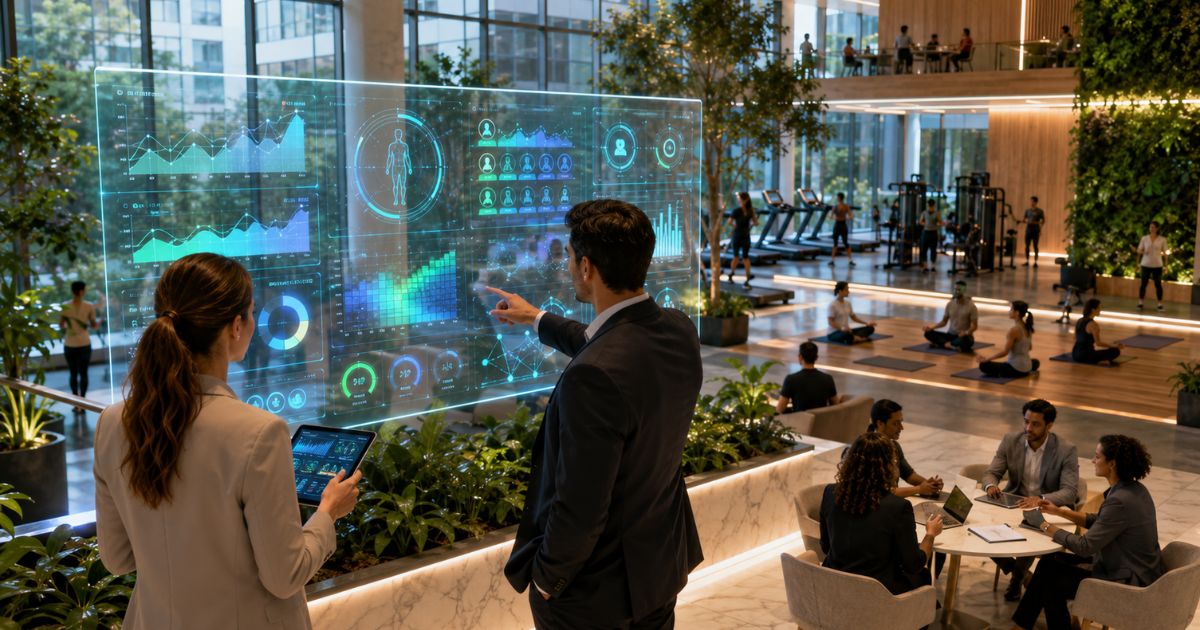
A modern Corporate Dashboard, like the one in Fitzpot, tracks more:
- Corporate Wellness Score
- Burnout Risk
- Engagement Trend
- Participation Rate
- Program Effectiveness
- Productivity Correlation
- Retention Impact
Together, these give leaders a live view of staff health. No more waiting for one report a year.
Predictive Analytics: Getting Ahead of Decline
AI wellness tools don't just report. They predict.
Old tools tell you sign-ups dropped after it happens. Predictive analytics spots the early signs first. It can help you:
- Catch a drop in sign-ups before it fully hits
- Predict burnout risk by person or team
- Guess how new programs will be adopted
- Suggest fixes on its own
- Predict ROI from current trends
AI tools close this gap. HR teams get a heads-up, not a post-mortem.
Simplifying Vendor Discovery with a Corporate Wellness Marketplace
Building a full wellness program used to take hours of manual work. You had to find gyms. Check out trainers. Find food coaches. Find mental health help. It's slow. It stalls the whole launch.
Fitzpot fixes this with a Corporate Wellness Marketplace. Companies can find and connect with:
- Gyms and fitness studios
- Personal trainers
- Wellness coaches
- Mental health and food experts
A marketplace keeps your list of providers fresh. Your program can grow as staff needs change.
Wearables and Connected Wellness Data
Wearables are no longer a nice extra. They're a core tool. They track real activity, not just what people say they did.
Modern platforms link up with major wearable brands:
- Apple Health
- Fitbit
- Garmin
- WHOOP
- Oura
- Google Fit
This data feeds wellness scores and tracking tools. Staff and admins get a clear, live view of activity and rest. No manual check-ins needed. This same data also fuels burnout risk alerts and predictions.
The 6-Month Wellness Launch Roadmap
Month 1 — Assessment & Planning Survey staff. Find the barriers. Set goals. Pick your program parts. Set a budget. Find vendors or a marketplace partner.
Month 2 — Partnership & Setup Pick vendors for gyms, checkups, and coaching. Or find them through a Marketplace. Agree on rates. Build your sign-up plan.
Month 3 — Launch & Communication Soft launch to leaders. Full kickoff event. One-on-one sign-ups. Help early joiners. Aim for a third to half of staff to join at first.
Month 4 — Engagement & Support Run your first wellness challenge. Start checkups and coaching. Share updates and early wins. This is when wellness scores start to build a real baseline.
Month 5 — Optimization & Expansion Gather feedback. Adjust based on sign-up and burnout data. Grow what's working. Launch a second push.
Month 6 — Measurement & Planning Measure results. Work out savings with an ROI dashboard. Gather feedback. Set goals and a budget for Year 2.
Best Practices That Differentiate Successful Programs
- Leaders take part. Sign-ups rise when bosses join in too.
- Make it a choice, not a rule. Add strong prizes. Programs that feel forced breed resentment.
- Make it personal. Offer fitness, mental health, food, and checkup options. Use an AI tool to tailor the mix.
- Build in teamwork. Team challenges and leader boards boost long-term sign-ups.
- Use good tech. Apps, wearables, and AI tracking beat old paper surveys.
- Talk often. Regular updates beat one big launch speech.
Common Wellness Program Mistakes
- Wellness theater. Launching with no real push behind it. Result: few sign-ups, no ROI.
- One-size-fits-all. Skipping mental health and food, and only doing fitness.
- No measurement. Assuming it works instead of proving it. This makes it an easy cut in budget talks.
- Unsustainable expectations. Expecting big sign-ups in month one.
- No individual support. No onboarding or coaching. Interested staff drop off fast.
- Ignoring non-participants. Only helping staff who were already healthy and keen.
Choosing the Right Corporate Wellness Platform
Many tools just handle admin work. Sign-ups. Scheduling. Basic tracking. That's needed. But it's not enough.
Fitzpot's product docs say its edge is smart wellness insight, not just admin tools. It brings AI tips, predictions, and clear results into one system.
When you check out a platform, ask if it can:
- Build a Wellness Score for each person, and a Corporate Wellness Score for the firm
- Flag burnout risk before it shows up in exit interviews
- Suggest tips just for each person, not generic content
- Show a live ROI dashboard, not a once-a-year sum
- Link to wearables for real, live activity data
- Offer a marketplace of vetted wellness vendors
These features set a true AI wellness platform apart from a basic benefits app.
Conclusion
Employee wellness programs pay off when done right. The keys are:
- A program with many parts
- Leaders who back it and push it
- Real support and coaching for each person
- Regular updates
- Ongoing, careful measurement
- A focus on the long haul, not just launch day
Launch Yours This Year
- Check your current state
- Design a full program
- Get leader buy-in and a budget
- Run the 6-month launch plan
- Measure and adjust as you go
- Plan your Year 2 growth
Modern wellness programs need more than a yearly check-in. They need steady engagement, real measurement, early warnings, and live ROI data. Tools like Fitzpot bring all of this together. They help firms boost staff health and make smarter, data-driven choices. Wellness stops being a once-a-year event. It becomes part of how the business runs, day to day.